


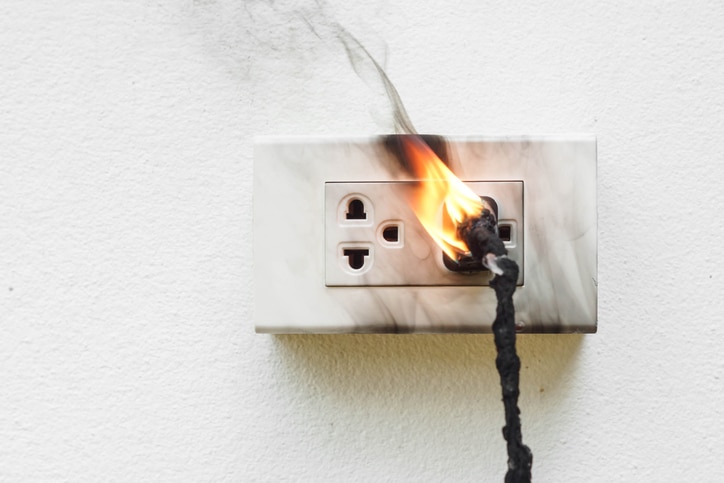
It is crucial to have surge protectors located where necessary in your home to protect electronics and other equipment from voltage spikes. They can also help prevent fires, shock, and other electrical hazards. It is important to be able to identify signs of surge protection failures so that the problem can be corrected immediately by a professional, as this will keep small problems from becoming big. In this article, we will discuss the top signs of surge protection failures for you to look out for.
Physical Damage
Physical signs of a surge protector failure are cracks or breaks from a surge or physical impact. Signs of melting indicate an excessive heat problem or some type of internal failure of the protector. Discoloration can also be a sign of overheating or some type of electrical problem.
Strange Odors
Surge protectors should never give off any odors, and they should rarely get hot. A burning odor is a good sign that there is a serious issue with your surge protector. This is a dangerous problem that could start a fire. If you smell burning or any other odor coming from your surge protector, it should be unplugged immediately. If the smell continues after unplugging, there is a good chance it is damaged internally and should be repaired or replaced.
Water Damage
Signs of water or moisture damage include corrosion or rust spots on the metal parts of the surge protector. Water damage can lead to a short circuit, which can cause a fire or permanent damage to the device. Surge protectors should never be placed near a water source or in areas where moisture buildup could occur.
Noise and Indicator Light
An indicator light that is not working or is physically damaged is a sign that your protector has a problem. Strange noises such as humming, popping, or hissing sounds indicate overheating or some other internal issue. These sounds could also be induced by a device that is plugged into the protector. If you hear any noises, unplug devices one by one to see if the sound stops. If it doesn’t, it means your protector is most likely the problem.
Frequent Tripping
A surge protector that is functioning properly should never trip unless its rated load is exceeded or a voltage spike occurs. If you know that your plugged-in devices are working properly, but your protector still trips frequently, there is a good chance your protector has failed and requires replacement.
Surge protectors play a critical role in protecting your devices from voltage spikes. While they are designed to be durable, they will eventually experience some of the problems we discussed earlier.
Don’t delay in getting help if you notice any of these signs. If you need surge protection services in the St. Louis, MO area, don’t hesitate to contact Innovate Electric today.
